Episode Count: 24 episodes – each around an hour long.
Princess Hours is one of those dramas – you know, the ones frequently cited by older fans and in books about Hallyu, like Winter Sonata, Jewel in the Palace, and Full House.
[If you were alive in mid-2000s Philippines, you might not know about Princess Hours, but you’d probably know “Perhaps Love” when you hear it.]
It’s a classic because of its unique premise: a politically arranged marriage between Prince Bad Communication Skills Lee Shin and Poor But Lovably Spunky Heroine Shim Chae Gyung, set in a constitutional monarchy AU! South Korea.
[The beginning of the drama explains more about that last part, and honestly it’s the first time I’ve seen a KDrama begin with a fourth wall break.]
I won’t go into a nitty-gritty review of the drama because it doesn’t hold up too well, plot-wise and character-wise. For example, Lee Shin is typical as a KDrama male lead of the time, as he is a slightly toxic tsundere. But you watch dramas like this for the chemistry between the cast and the dramatic tension in the storyline, so this one was mostly enjoyable and only sometimes cringey.
Princess Hours is a riot for its crazy entanglements (generational love-triangle problems), gimmicky shenanigans (the teddy bears recreating scenes at the end), and wacky situations (meeting fake Prince William).

I will, however, examine one message the writers kept hammering in during the first half of the story (then completely neglected in the second half, along with their skills in covering up story holes and gaps).
The “Hours” part in the title hints a lot at this message. Partially, it tells us about the hours Shim Chae Gyung (the titular princess) spends learning How To Royal. (Shoutout to its literary ancestor, princess lessons from The Princess Diaries). In other ways, it spoils the drama in a sense that in the long run, Chae Gyung doesn’t actually spend that much time as Crown Princess.
But really, I’m thinking that the time-element in the title echoes the time-element that is repeated constantly in the dialogue: the past.
The great evil in Princess Hours is the past. The past tyrannizes the lives of those living in the present – be they hero or villain.
This is more clearly seen among the so-called villains. Hyo Rin, Lee Yul and Yul’s mother all feel entitled to something (or someone) because of past ties. Hyo Rin feels like she deserves Shin because he proposed to her first, while Yul thinks he deserves Chae Gyung because he was the one engaged to her BEFORE Shin. Of course, Yul’s mother feels entitled to her husband’s power – but it adds a layer of complexity to her. More than being driven by revenge and greed, she is driven by a sense of sentimentality, a connection to that position that makes her think she and her son should return to the palace. (Also some romantic attachments to the current Emperor, but let’s skate over that.)
And though Prince Lee Shin and Chae Gyung eventually become happy together, the past promises of their grandfathers to marry them keep them miserable throughout most of the drama. I think Chae Gyung, in particular, is the one most brutalized by these past connections. Between Hyo Rin and Shin, Yul, and both grandfathers, Chae Gyung is also trapped by the traditional ways of the palace.
Chae Gyung thinks like a 21st century girl – hell, we were introduced to her as someone who put a pair of sweats under her school skirt and calls it “hybrid fashion”. Clearly, she doesn’t like to be boxed in and this is why try as she might, she cannot conform to the palace and its archaic rules.
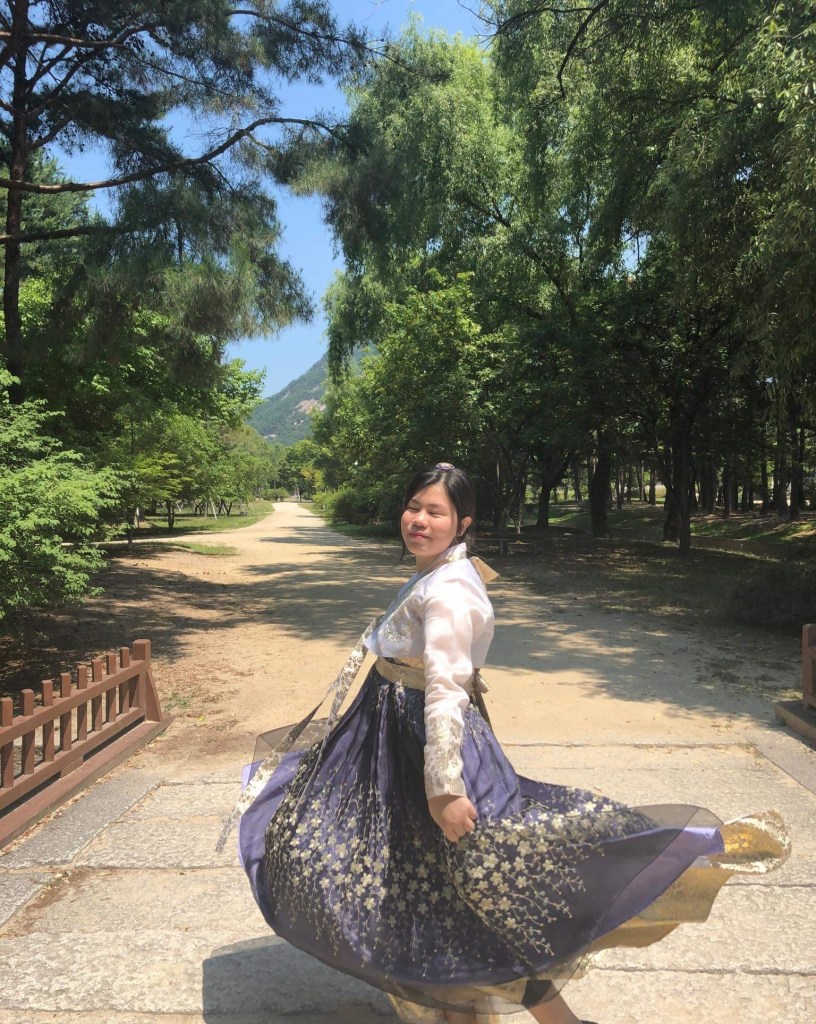
[Sidenote: I love the hybrid princess fashions she wore in the earlier episodes. The colors, accessories, and blouse-cuts are very traditional, but the bottoms are flouncy and fun and short. I was really sad when they stopped pulling those looks together mid-series, probably to show that she was too miserable to care, but I digress.]

Moving on from the past is the major lesson of Princess Hours. Aside from reforming tradition and our royalty-obsessed love for the monarchy, it talks a great deal about letting go of old relationships that keep us from moving towards future happiness.
Time is really what they needed in the drama: the time to move on from old loves, time to be teenagers and grow into themselves, and time to learn to like each other. Mostly, we got to see time the main couple wasted in hatred and spent away from each other, which is a little sad. I wish we had more time to see Shin and Chae Gyung happy together, but alas, the writers weren’t generous enough, even with the ending.
For people who enjoyed the drama, I would recommend the Goong manga (which I think is the source material). It covers more about the other members of the family (like the history between the King and Yul’s mother) and the college-age years of the teen characters. It also gives us more time to appreciate Shin’s side of things and honestly makes Yul at least 50 degrees less creepy.












 writing space for now