The Great Library Reread Part 1: The Hunger Games and Catching Fire

The Great Library Reread Project is something I want to introduce to my blog. Because it’s been a few years since I’ve read my collection of books, I wanted to revisit them and share the thoughts of my older self here.

Since I was reading A Ballad of Songbirds and Snakes aka the prequel to the Hunger Games Trilogy, I decided to go back to Suzanne Collins’ original novels to see how it holds up. I’ve read the entire trilogy cover to cover several times when I was high school, but it’s been some years since I last picked them up.

Original Thoughts: The first time I read “The Hunger Games”, it was a Saturday. I remember it very clearly, since I met up with my friend to borrow his copies. When I got home at around 1 pm, I did not move from the bed at all. I was reading continuously until 6 pm. I remember going down to dinner and eating my food dazedly, as I began to flip through “Catching Fire”. I was so, so obsessed that the next week I was reading “Mockingjay” during class. It totally snowballed from there – I got into the fandom, I had merchandise, and I was Katniss for Halloween. Twice.

You know the story. Girl’s little sister gets chosen to fight in a battle against 23 other children. Girl takes her place. Girl meets boy who saved her life years earlier by chucking bread at her. Together they make their country look stupid. This triggers uprisings around the country, and they are forced to fight to the death again. Boy and girl are separated, and the revolution begins.

Yeah, the first two books were extremely engrossing and action-packed. My friends all liked these first two books, but never appreciated Mockingjay as much as I did. I’m rereading Mockingjay now, so I’ll save my thoughts on that for later. But the first two books really reel you in with the pacing and the educational quality to them. I really appreciated Katniss for teaching me that mud helps with bee stings, since the year the books came into my life was the year a hive formed in our backyard.

Grown-up Thoughts:

I had always enjoyed Suzanne Collins’ insights in these novels. People would describe the trilogy as “the thinking girl’s Twilight”, but that kind of language diminishes the value of both YA franchises. And it’s more than just a love triangle – that part barely even factored in.

What most people don’t “get” is that thread of politics, the commentary on war, poverty, and injustice. They dislike it because it draws the focus away from the bloody spectacle of the Games, which honestly makes everyone sound like a vapid citizen from the Capitol.

The older I get, the more I see how the Capitol neglected their responsibility as “the ruling city” towards the outlying districts. They foisted all of those hardships onto the citizens as individual concerns rather than communal ones. Suzanne Collins was trying to hone in this point that governance should be accountable for every death they create. And they are the ones killing people – by allowing them to starve to death, by putting their children in the Games, and by upholding a deeply flawed system.

Now, more than ever, “Catching Fire” is so relevant. A commentary I read recently about it mentioned Catching Fire as a primer for instigating a rebellion. Social change and social justice cannot be achieved without a measure of sacrifice; this much is true for both our world and for Panem. We see how the Districts organize for a revolution in this book, and I’m impressed that Suzanne Collins was able to impart that to me at the age of fourteen.

Katniss Everdeen remains in my consciousness as another angry, compassionate girl. My young self was always enraged with how the world was. My older self knows more and is still enraged, but is also growing weary. It’s times like these when I have to call on Katniss and channel her the most. And I think it’s been obvious, the way my mind keeps returning to her. I really wish everyone would find and learn from Katniss again.
Jane Austen Characters as ABBA Songs – A Thread

It is exactly what it says on the tin. Let’s get cracking. I will be sorting Jane Austen’s characters to their respective ABBA theme song – which I will cherry-pick from among my favorites in the Mamma Mia! and Mamma Mia! Here We Go Again soundtracks. OK , let’s go!

Money, Money, Money: This song is so universal, I could assign it to a dozen Austen characters and it would work. But I have to say, I am giving this one to Mrs. Bennet, though the wealthy man is not for her – it is for her daughters. The song outlines the first two or three chapters of Pride and Prejudice, where Austen puts a magnifying glass on money and the marriage-market.

Mamma Mia: This one is for my girl, Anne Elliot. Yes, she has been brokenhearted and blue since the day she was persuaded to part with Captain Wentworth. She spends 20% of the first chapter asking herself why she let him go.

Dancing Queen: Young and (not really) sweet, but almost seventeen – Lydia Bennet is a dancing queen raring to go at every ball she goes to. And she really does have the time of her life! Except when it nearly ruined her and her sisters’ reputations.

The Name of the Game: This song is best suited for Catherine Morland, the curious child with a first crush on a guy who understands her. Honestly, Henry Tilney is the one Austen hero who has never given me a reason to doubt his affection and intentions. They’re like, the only straightforward couple here.

Take A Chance On Me: Fanny Price is the character that fits this song best, and honestly the reason why I had the idea to come up with this list at all. If a Regency woman was allowed to properly hit on a man, all Fanny has to do is borrow the words from ABBA.

When I Kissed The Teacher: It’s a low blow but this jam is for Frank Churchill on the day everyone learned he was secretly engaged to almost-governess Jane Fairfax. The village of Highbury would have screamed if it was polite to do so.

Waterloo: Finally, an ABBA song with a title that Jane Austen herself would be familiar with. Napoleon was a distantly looming character in Austen’s context, given her brothers were in the navy fighting the French in the Napoleonic Wars. I would say this is a song for the couples where Austen has battling at the beginning, like Lizzie-Darcy or Emma-Knightley.

Why Did It Have To Be Me: Lady Susan is Austen’s best lady-fuccboi character: beautiful, charming, and manipulative. So of course, men are just toys to play with for her. Poor Reginald. He deserved much better treatment from his future mother-in-law.

Angel Eyes: Truly, another song that can be applied to a number of Jane Austen cads – but I have to give this dedication up to Mr. John Willoughby. This is a song only Marianne Dashwood could sing, backed by Miss Sophia Grey and the younger Eliza, Colonel Brandon’s ward. He took their hearts and everyone paid a different price. Fortunately, Marianne gets the best bargain, methinks.

Austen was a woman remarkably ahead of her time, but I don’t know if she would approve of this list. I think she wold be cool with it.

That’s all for this week, and remember to stay classy!

Love advice #001: Find yourself a pardner you will never get tired of saying “Howdy!” to.

10 Comfort Films for The Soul

I have to preface this post by saying that these are films that have comforted me over the years. I’m not saying they are good films. I’m just saying they are films I use to escape life’s little miseries, okay?

1. 10 Things I Hate About You: As a big Shakespeare fan, this is the only valid adaptation of The Taming of the Shrew. Or it’s one of the most fun, at least.

2. Clueless: As a big Jane Austen fan, this is the best adaptation of Emma. While the 2020 version is a contender, Clueless is iconic. So many people are unwittingly supportive of Jane Austen when they stan Clueless.

3. Ever After: I love fairytale film adaptations and Ever After is such a charming Cinderella story. Medieval France as a setting just let them go ham on the period costumes, and Da Vinci as the fairy godmother is something we never knew we needed.

4. Ferris Bueller’s Day Off: The hijinks Ferris Bueller goes through as he cuts school with his friends are wildly entertaining. My favorite scene has to be where he ends up singing Twist N Shout on top of the float.

5. Flipped: My friends and I spent our freshman year obsessed with this movie and the book. It’s a solid YA film adaptation and as I always say, it appeals to our fantasy of falling in love with the boy who lives next door. (Unfortunately for me, my neighborhood growing up was full of old people.)

6. Marie Antoinette: Studying costumes are a huge passion of mine, but I didn’t realize how much it fascinated me until this film. The colors tell the story of Maria Antonia, Archduchess of Austria as she transforms into Marie Antoinette, Queen of France.

7. Mirror Mirror: Never liked Snow White as a story much when I was growing up, but I was pulled into this world by the costumes and Julia Roberts’ acting. The plot isn’t great and there are a lot of campy shenanigans, but it’s so entertaining.

8. Moana: I cried the first time I watched Moana in the cinemas, starting from when she rescues the baby turtle at the beginning and until she frees Te Fiti at the end. I still cried over the next ten times I watched that film.

9. Nick and Norah’s Infinite Playlist: Back in my YA phase, this book and the film adaptation spoke to my delusional teenage self. I just really wanted to find someone equally artistic and lost as the protagonists, but all I got out of this film was the kick-ass playlist.

10. Penelope: The story of a aristocratic rich girl born with a pig’s nose and an overbearing mother was probably right up my alley. Still, it’s all about love and self-acceptance, and I am a big softie deep inside.

I guess that wraps up my list for now. I have many other favorite films that I’ve only watched once, and a list of things to watch that will keep me busy for a lifetime. Still, life is so busy and chaotic that it’s good to have some pockets of comfort to return to every now and then.

Book Review: A Ballad of Songbirds and Snakes

Back when the Hunger Games trilogy was in vogue, how big of a fan were you? Me, I was …

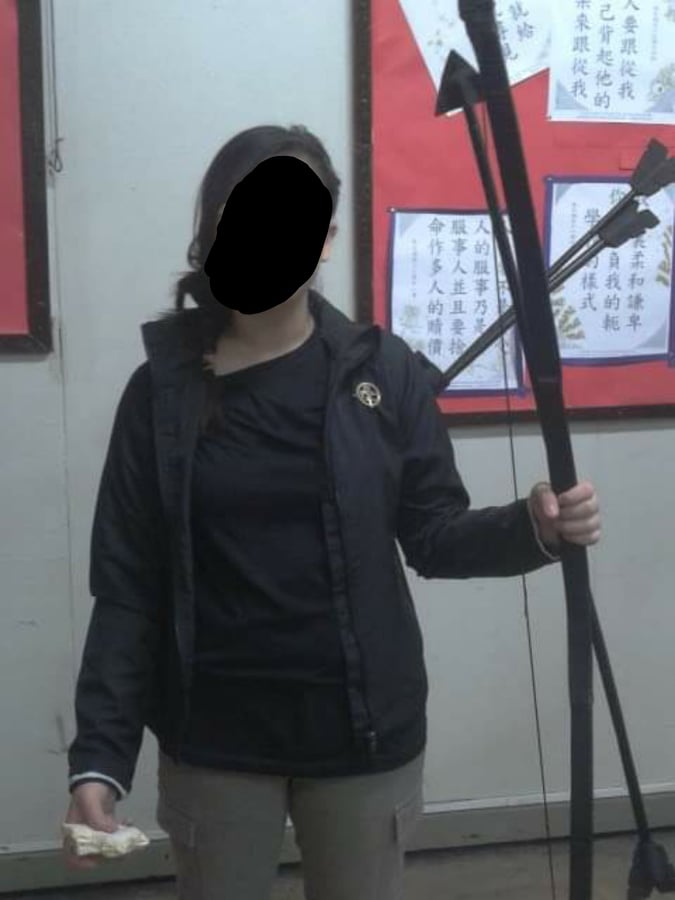
Yep. That’s me, a bespectacled little Chinese Katniss for a theatrical contest.

Forgive me. We are in the middle of the end of the world, so we’ve somehow managed to summon 2012 back. The Percy Jackson series is coming to Disney+, and this prequel to the Hunger Games was released.

As you may have guessed from last week’s post, I will be talking about that. I decided to indulge in the remembrance of my youth and delve once more into the land of Panem, to see what Suzanne Collins has to tell us in the decade since Mockingjay was released.

“A Ballad of Songbirds and Snakes” is a prequel to the Hunger Games trilogy, and it follows the original series’ main antagonist President Snow. We see the young Coriolanus Snow, who is from a once-great Capitol family fallen on hard times, trying to get back on track to the privileged life promised to him.

As he is an excellent student, he was chosen to mentor for the 10th Hunger Games, which wasn’t a big of a hit in the Capitol as it was in Katniss and Peeta’s time. His task as a mentor is to figure out how to make the games more engaging for the Capitol and district citizens. Towards the end of the book, we’ll see him leave the framework for the Hunger Games format we knew in the original trilogy.

Snow gets assigned to mentor the girl chosen from District 12. During the Reaping, it turns out to be this enigmatic and charming girl named Lucy Gray Baird. So, yeah, he has a lot to work with – a far cry from Haymitch trying to make Katniss more appealing and palatable.

There were a lot of callbacks to the original series in this one. I liked spotting all of the little “hellos” Suzanne Collins left for fans of the trilogy. What I really enjoyed was seeing how Suzanne Collins sort of backtracked and explain to us how everything was shaping up after the war which led to the Panem of the 74th Games. She also built up certain things in this book that are directly related to Katniss and her story, so I find it interesting that she let Snow have all these connections to Katniss.

Did I like that we were in the mind of future fascist President Snow? We see him make bad choices over and over again, but he still thinks he’s right so, yeah… that sounds fascist to me. I think what Suzanne Collins was trying to do here was to give us an analysis of how human efforts to control everything around them including nature are detrimental to the free will and reason of other beings.

I liked that we were almost explicitly told that, hey, the government is responsible for the citizens and not the other way around. They owe us the things we need to become moral and productive, and only when they provide those can there be peace and prosperity. If we are constantly placed in situations where we have no choices at all, then yeah, we go back to being rabid animals.

Overall, in my opinion as the biggest Hunger Games fan I know, this book could not have come at a better time in history. We are at a frightening turning point where all the gaps of an ill-conceived system are showing up, and unless we fix this right, we will lose everything.

I hope we all make better choices than 18-year old Coriolanus Snow did. May the odds be ever in our favor.